While the volume of arms imports by states across Africa overall decreased by 41% between the 2016-2020 and 2021-2025 periods, West African arms transfers rose sharply as the security situation in the region deteriorated.
This is according to the Stockholm International Peace Research Institute (SIPRI), which has released new reports on global arms transfers recently. The Institute noted that the combined arms imports of West African states almost doubled (+82%) between 2010–14 and 2020–24. Nigeria accounted for by far the biggest share (34%) of arms imports to West Africa in 2020–24.
“The growth in arms imports to West Africa has been striking. While the volume of imports remains relatively small, it has important geopolitical implications,” said Katarina Djokic, Researcher with the SIPRI Arms Transfers Programme.
“States like Burkina Faso, Mali and Senegal seem to be rapidly increasing their imports. Arms suppliers are using arms exports to boost their influence in this part of the world, including emerging suppliers—primarily Türkiye—alongside more established actors such as China, France, Russia and the USA.”
The main suppliers to Africa in 2021–25 were the USA (accounting for 19% of African imports of major arms), China (17%), Russia (15%) and France (8.3%).
Morocco (rank 28 globally) and Algeria (rank 33) are by far the largest recipients of major arms in Africa. Their long-running tensions with each other are a major driver of their arms imports. Morocco increased its arms imports by 12% between 2016–20 and 2021–25. As of the end of 2025, it had pending imports from several states, including Spain and the USA.
Algeria’s arms imports decreased by 78%, having reached a peak in 2016–20. While the latest SIPRI data indicates that Morocco’s arms imports surpassed those of Algeria in 2021–25, Algeria is often secretive about its arms imports, and there were several unverified reports about arms deals with Russia in 2021–25, suggesting that SIPRI’s estimates may be on the low side.
States in sub-Saharan Africa increased their arms imports by 13% compared with 2016–20 and accounted for 2.2% of total global imports of major arms in 2021–25, according to SIPRI. The three largest recipients were Nigeria (receiving 16% of subregional imports), Senegal (8.8%) and Mali (8%).
China, which supplied major arms to 23 states and accounted for 22% of subregional imports, was the largest supplier to sub-Saharan Africa. Russia was the next largest supplier (accounting for 12% of imports), followed by Türkiye (11%).
There were several large-scale armed conflicts in sub-Saharan Africa during 2021–25, including the Sudanese civil war that broke out in 2023. “Tracking arms transfers to conflicts, especially in Africa, is difficult as they often involve high levels of secrecy,” SIPRI said.
The Sudanese armed forces and the opposing Rapid Support Forces (RSF) received transfers of major arms during 2021–25. Transfers to the RSF included four pieces of artillery and at least one air defence system from unknown suppliers.
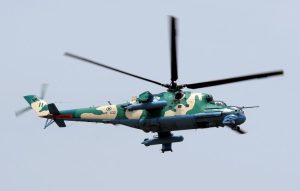
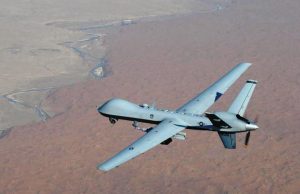
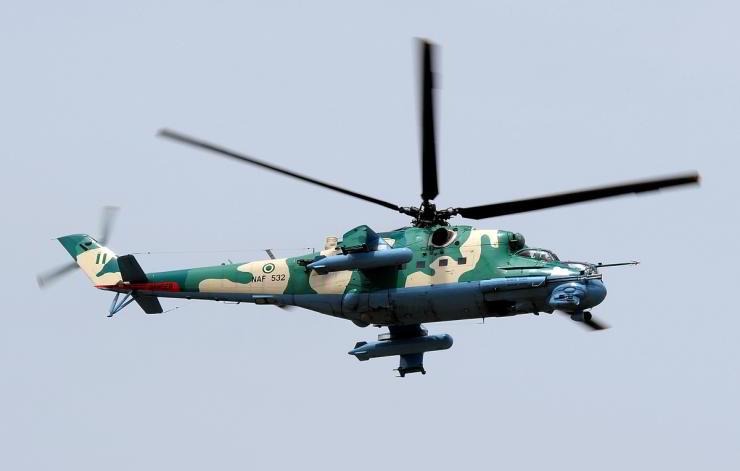
Transfers to the Sudanese armed forces included armed uncrewed aerial vehicles (UAVs, or drones), armoured vehicles and transport aircraft from at least five known suppliers—Belarus, Iran, Kyrgyzstan, Türkiye and the United Arab Emirates (UAE)—and one combat aircraft from an unknown supplier. (Defence Web)- (Photo: A NAF Mi-24 helicopter gunship. Defense Nigeria)