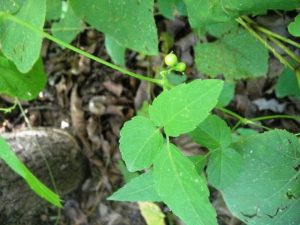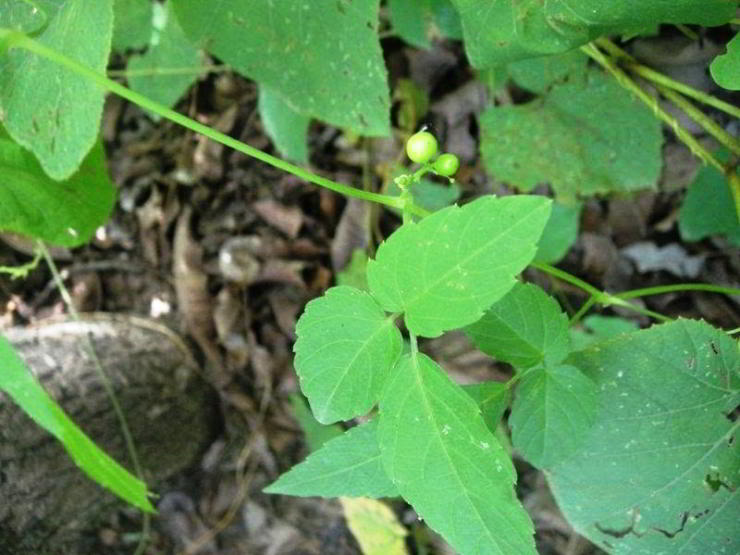
The plant is an important source of food, traditional medicine, fibre and insecticide for many communities in Africa.
Cyphostemma adenocaule is an herbaceous, perennial, climbing plant that belongs to the Vitaceae family. It produces annual stems ranging from 1.5 to 7.5 metres in length from a large tuberous rootstock. These stems spread across the ground and climb surrounding vegetation, using branched tendrils for support.
The plant is widely distributed throughout tropical Africa. It thrives in diverse habitats including savannah woodlands, bushlands, thickets, grasslands, gallery forests, secondary forests, sandy riverbanks, rocky outcrops, and abandoned agricultural land.
Cyphostemma adenocaule (Steud. ex A.Rich) is an important source of food, traditional medicine, fibre and insecticide for many communities in Africa. It is commonly consumed in Nigeria, Ghana, the Democratic Republic of the Congo, Uganda, Ethiopia and Eritrea, as well as several other African countries.
Many species within the Cyphostemma genus are recognised for their nutritional and medicinal value; they have also long been incorporated into traditional African diets. The plant is particularly valued as a leafy vegetable.
The leaves are commonly boiled and eaten as a vegetable, or added to soups and stews. They are often cooked with beans, pigeon peas, cowpeas, groundnuts or sesame seeds to enhance the flavour and nutritional value. Traditionally, the leaves are pounded into a paste before consumption. The fruits can be eaten raw or cooked and are sometimes added to soups.
The roots of Cyphostemma adenocaule are edible when cooked and are typically boiled prior to consumption. In some communities, the roots are sliced and dried before being pounded into flour and stored as a reserve food during periods of famine and food scarcity.
Cyphostemma adenocaule occupies an important place in traditional African medicine. Various parts of the plant, including the leaves, stems, roots, root bark and leaf sap, are used to treat a variety of ailments.
The leaves can be chewed to relieve toothache and sore throats. Macerated leaves mixed with honey can be used to treat coughs. Leaf infusions act as a purgative and are also used to treat abdominal swelling. Traditionally, the sap extracted from the leaves is applied to cuts and used to treat ophthalmia and other eye infections.
Heated leaves are applied to the skin as compresses to reduce swelling, and are placed on the chest to treat pneumonia. Root and leaf preparations are also prescribed for diarrhoea, especially if it is bloody. Root preparations are widely used to treat intestinal worms, particularly tapeworm infections, and have also been used to treat malaria.
In addition, the water obtained by boiling the roots is consumed to treat conditions such as syphilis, abdominal pain and reproductive health issues, including the prevention of miscarriage. A paste made from the roots is applied externally to draw out abscesses, reduce skin swelling and reduce the size of lumps. The diverse nutritional, medicinal and socioeconomic benefits of Cyphostemma adenocaule highlight its importance as a valuable indigenous African plant species. (Richard Komakech) – (Photo: Facebook)