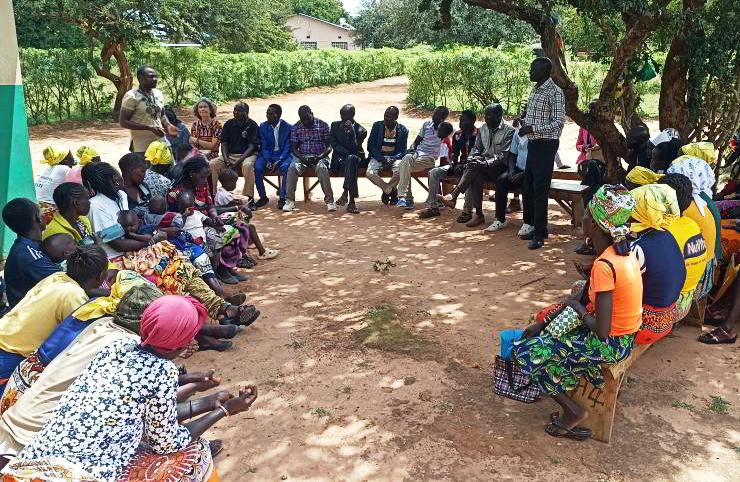
The Comboni Lay Missionaries (CLM) in West Pokot, Kenya, have started a project called the Community-Based Organisation (CBO) to empower families and promote sustainable livelihoods. Pius Oyoma, the local coordinator of CLM, talks about this initiative.
West Pokot County, one of the 14 counties in Kenya’s Rift Valley region, is located in the North Rift along the country’s western boundary with Uganda. The region is predominantly inhabited by the Pokot community, with a minority group of Sengwer people. Despite a history rooted in pastoralist traditions, West Pokot is increasingly becoming known for its rich cultural heritage, potential for agricultural development, and social resilience.
The people of West Pokot are profoundly religious. The majority are Christians, both Catholic and non-Catholic, while a smaller population adheres to Islam. Religion plays a significant role in daily life and community decision-making. The Catholic Church, in particular, has made deep inroads, contributing to education, health, and social development.
While the people hold tightly to their cultural values and traditions, there’s an admirable embrace of diversity. Cultural practices, songs, and dances remain a vital part of life, even as modern influences become more prominent.
Agriculture and livestock remain the backbone of the county’s economy. Over 80% of the population is engaged in farming, animal husbandry, and related activities. The land’s varying altitudes present different agricultural opportunities. In the northern and north-eastern parts of the county, the terrain consists of dry plains at altitudes below 900 meters above sea level.
The higher altitude zones have excellent agricultural potential due to fertile soils and consistent rainfall. Medium-altitude regions, ranging between 1,500 to 2,100 meters above sea level, receive less rainfall and are mainly used for pastoralism. Low-lying areas like Alale, Kacheliba, Kongelai, and Kitelakapel are more vulnerable to drought and water scarcity, posing challenges for sustainable farming.
Historically, the Pokot community has been firmly rooted in traditional practices. This has contributed to the delayed acceptance of formal education, especially among girls. Many families are polygamous, and early marriages are still common. These factors have led to high school dropout rates, early pregnancies, and limited educational attainment for young women.
Additionally, family fragmentation, rising cases of divorce and separation, and weak parental structures have had negative effects on children’s emotional and behavioural development. Alcoholism, drug addiction, and the spread of sexually transmitted infections such as HIV remain pressing challenges for the community, particularly among youth and unemployed adults.
Kitelakapel, one of the rural areas in West Pokot, exemplifies both the challenges and resilience of the county. Approximately 90% of the population lives in poverty. A small middle class, mainly teachers, civil servants, and a few commercial farmers, forms the remaining 10%. Despite these figures, signs of transformation are beginning to emerge. Agricultural productivity is improving due to more consistent rainfall and the application of natural fertilizers like cow dung. Maize and vegetables are widely cultivated on fenced plots to protect crops from free-roaming livestock. Recently, hybrid livestock breeds have been introduced, helping boost both milk and meat production for domestic and commercial use.
The large tracts of land held by families offer great potential for commercial agriculture. Access to better equipment, tractors, irrigation systems, and quality seeds would allow farmers to increase food production and prepare adequately for drought seasons. Additionally, reclaimed land, once considered barren, is now producing onions, green peppers, tomatoes, and leafy greens through underground water irrigation initiatives.
To address both economic and social issues, the local population under the guidance of the Comboni Lay Missionaries, Kitelakapel, have formed a Community-Based Organization (CBO) aimed at empowering families and promoting sustainable livelihoods. Officially registered and certified by the government, the group currently has 175 active members and continues to attract new applicants.
The CBO is launching income-generating projects such as beekeeping, handicrafts, catering services, and poultry farming. Profits from these ventures will be distributed as loans to members and also serve as interest on their savings. The initiative is especially important for women and youth who lack formal employment. Through these activities, they are gaining financial independence, steering away from addiction and social vices. Self-help groups and cooperatives have become important pillars for social cohesion and economic inclusion. They foster trust, provide savings and credit opportunities, and encourage active participation in socio-economic development.
As the local coordinator of the Comboni Lay Missionaries (CLM) in Kitelakapel, member of the parish development committee, and treasurer of CLM, I have drawn on my background in business administration, accounting, and project management to serve the community. It has been a deeply fulfilling experience to help unite people and share knowledge that promotes empowerment and transformation. Under the guidance of the Catholic Church, and supported by structures like JPIC, Caritas, parish councils, and development committees, we have seen notable progress in community organization and spiritual revival.
When I first arrived in Kitelakapel, very few men attended church. In many Sunday Masses, only two or three men would be present. This sparked the launch of the “Send Men to Church” campaign under the Catholic Men Association (CMA) and our CBO. Today, the results are remarkable: more than 30 men now participate actively in parish life, working alongside women to build a better future.
The collaboration between Catholic Men Association (CMA) and the Catholic Women Association (CWA) has strengthened family and community bonds. They regularly visit each other, offer financial support for those in critical need, and pray together. This spiritual partnership is restoring hope and dignity among many households.
The Catholic Men Association has played a vital role in addressing addiction, domestic violence, and isolation among men. Their motto, ‘Good man, good family. Good family, good church. Good church, good society’ , has resonated widely. In the past two years, many men have been baptized, trained, and actively integrated into church activities. Pilgrimages, retreats, and leadership training have not only enhanced spiritual life but also built moral and social responsibility.