According to new data published by the Stockholm International Peace Research Institute (SIPRI), the volume of major arms transferred between states increased by 9.2 per cent between 2016–20 and 2021–25. States in Europe more than tripled their arms imports, making it the biggest recipient region. Total exports by the United States, the world’s largest supplier of arms, increased by 27 per cent. This included a 217 per cent increase in US arms exports to Europe.
The increase in global arms flows was the biggest since 2011–15. It was overwhelmingly due to the growth in transfers to Ukraine (which received 9.7 per cent of all arms transfers in 2021–25) and other European states. Besides Europe and the Americas, arms imports to all other world regions decreased.
“While tensions and conflicts in Asia and Oceania and the Middle East continue to drive large-scale arms imports, the sharp increase in arms flows to European states pushed global arms transfers up almost 10 per cent,” said Mathew George, Director of the SIPRI Arms Transfers Programme.
“Deliveries to Ukraine since 2022 are the most obvious factor, but most other European states have also started importing significantly more arms to shore up their military capabilities against a perceived growing threat from Russia.’
The United States supplied 42 per cent of all international arms transfers in 2021–25, up from 36 per cent in 2016–20. The USA exported arms to 99 states in 2021–25, including 35 states in Europe, 18 in the Americas, 17 in Africa, 17 in Asia and Oceania and 12 in the Middle East. For the first time in two decades, the largest share of US arms exports went to Europe (38 per cent) rather than the Middle East (33 per cent). Nevertheless, the top single recipient of US arms was Saudi Arabia (12 per cent of US arms exports).
France was the second largest supplier of major arms in 2021–25, accounting for 9.8 per cent of global exports. Its arms exports increased by 21 per cent between 2016–20 and 2021–25. France exported to 63 states, with the largest shares going to India (24 per cent), Egypt (11 per cent) and Greece (10 per cent). France’s arms exports within Europe rose more than fivefold (+452 per cent), but almost 80 per cent still went outside the region.
Russia was the only top 10 supplier to see its arms exports fall (–64 per cent). Its share of global arms exports shrank from 21 per cent in 2016–20 to 6.8 per cent in 2021–25. Russia supplied major arms to 30 states and 1 non-state actor in 2021–25. Nearly three-quarters (74 per cent) of Russian arms exports went to three states in 2021–25: India (48 per cent), China (13 per cent), and Belarus (13 per cent).
Germany overtook China to become the fourth largest arms exporter in 2021–25, with 5.7 per cent of global arms exports. Almost a quarter of all German arms exports (24 per cent) went to Ukraine as aid (and another 17 per cent went to other European states).
Arms exports by Italy increased by 157 per cent, pushing it from the tenth largest exporter in 2016–20 to the sixth largest in 2021–25. Over half of Italy’s exports went to the Middle East (59 per cent), while 16 per cent went to Asia and Oceania and 13 per cent to Europe.
Israel, the seventh largest arms supplier, increased its share of global arms exports from 3.1 per cent in 2016–20 to 4.4 per cent in 2021–25, and for the first time ever, overtook the United Kingdom (3.4 per cent).
On the other hand, European states accounted for 33 per cent of global arms imports, with the region’s imports increasing by 210 per cent between 2016–20 and 2021–25. After Ukraine, Poland and the United Kingdom were the biggest importers in Europe in the past five years. Almost half of arms transferred to European states came from the USA (48 per cent), followed by Germany (7.1 per cent) and France (6.2 per cent).
Threat perceptions concerning Russia, compounded by uncertainties over the USA’s commitment to defending its European allies, have boosted demand for arms among European member states of the North Atlantic Treaty Organization (NATO).
The 29 current European NATO members’ combined arms imports grew by 143 per cent between 2016–20 and 2021–25. The USA supplied 58 per cent of these imports in 2021–25. The next biggest suppliers were South Korea (8.6 per cent), Israel (7.7 per cent) and France (7.4 per cent).
At 31 per cent, states in Asia and Oceania imported the second largest share of arms in 2021–25. This was despite a 20 per cent drop in volume compared with 2016–20. The fall was mainly due to decreasing arms imports by China (–72 per cent) and, to a lesser extent, by South Korea (–54 per cent) and Australia (–39 per cent).
Four states in Asia and Oceania ranked among the 10 largest arms importers globally in 2021–25: India, Pakistan, Japan and Australia. The main supplier to the region in 2021–25 was the USA, which accounted for 35 per cent of regional arms imports. Russia accounted for another 17 per cent and China for 14 per cent.
India was the world’s second-largest arms importer. Its imports decreased marginally (–4.0 per cent) between 2016–20 and 2021–25. The largest share of Indian arms imports came from Russia, at 40 per cent—a significantly smaller share than in 2016–20 (51 per cent) and almost half that in 2011–15 (70 per cent). India is increasingly turning to Western suppliers. Arms imports by Pakistan grew by 66 per cent between 2016–20 and 2021–25. China supplied 80 per cent of Pakistan’s arms imports in 2021–25, up from 73 per cent in 2016–20.
In East Asia, Japan (+76 per cent) and Taiwan (+54 per cent) saw large increases in their arms imports between 2016–20 and 2021–25. China dropped out of the top 10 arms importers for the first time since 1991–95, due to expanded domestic production of its own designs.
Arms imports by states in the Middle East shrank by 13 per cent between 2016–20 and 2021–25. Three of the world’s top 10 arms importers in 2021–25 were in the region: Saudi Arabia (6.8 per cent of global imports), Qatar (6.4 per cent) and Kuwait (2.8 per cent). More than half of arms imports to the Middle East came from the USA (54 per cent), while 12 per cent came from Italy, 11 per cent from France and 7.3 per cent from Germany.
“Gulf Arab states shape arms import trends in the Middle East, with Saudi Arabia having been the region’s largest importer since 2011–15 and Qatar now its second largest after more than doubling its imports between 2016–20 and 2021–25,” said Zain Hussain. “With several regional tensions and conflicts, Gulf Arab states are working to strengthen relations with long-standing suppliers like the USA and France while also seeking new suppliers.”
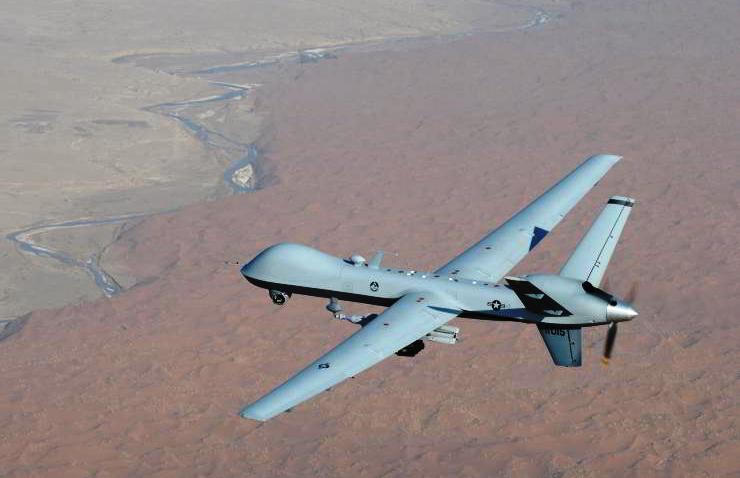
Israel was the world’s 14th largest arms importer in 2021–25, with its imports rising by 12 per cent between 2016–20 and 2021–25. In 2021–25, the USA supplied the largest share of Israel’s arms imports (68 per cent), followed by Germany (31 per cent). Throughout the multi-front war stemming from Israel’s large-scale military offensive in Gaza beginning in October 2023, Israel continued to receive arms from various suppliers, including F-35 combat aircraft, guided bombs and missiles from the USA. (Sipri Report) – (Photo: MQ-9 Reaper UAV/U.S. Air Force Photo / Lt. Col. Leslie Pratt)