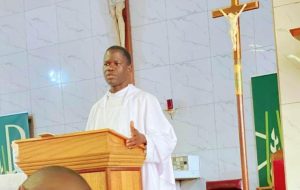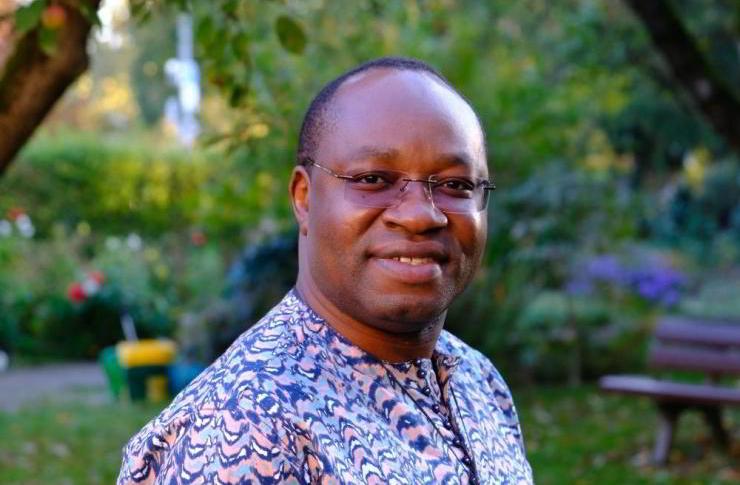
Father Joseph Mumbere Musanga accompanies Christian communities committed to protecting the environment. An ongoing struggle.
I am Congolese and have been working in Brazil for almost five years, specifically in the suburb of Pequiá, in the city of Açailândia, in the state of Maranhão. Upon arriving, I realised that the main suffering of our people is caused by air pollution from steel mills and the use of toxic pesticides in soya and eucalyptus farming.
My greatest joy has been meeting people and many women fighting for their fundamental human rights, and who, like little David, face the Goliaths of mining and agribusiness, responsible for the deforestation of our mission’s territory.
I have witnessed the partial victory of the residents of Pequiá de Baixo, who for years have suffered from industrial pollution and its consequences. These people, accompanied by the Justiça nos Trilhos association, which we Comboni missionaries founded, began demanding their rights in 2005. They demanded compensation from both the polluting industries and the state, which was guilty of allowing them to act.
This led to the relocation of the entire neighbourhood and the construction of new homes for the 312 families who lived there. On October 25, 2024, the keys to the new homes in the Pequiá da Conquista neighbourhood were handed over.
The inauguration ceremony marked the conclusion of a two-decade struggle, restoring dignity to a community that has demonstrated great resistance and resilience in the face of the devastating impact of pollution. That day, I shared an overwhelming emotion with the people. Tears and hugs mingled with the strength of those who have never given up in the face of adversity. The faces of the beneficiaries shone with hope for a more just and dignified life for these sons and daughters of God.
But that was only a partial victory. The struggle continues, and unfortunately, in Açailândia, there is a lack of collaboration between the leaders and priests of the city’s parishes to address these challenges together, following the Social Doctrine of the Church and the many fraternal campaigns promoted by the Brazilian Episcopal Conference.
We Comboni Missionaries feel isolated and abandoned when it comes to responding, as the Catholic Church, to the challenges facing our region. For example, every year we organise the “Festa da Colheita” together, a popular festival whose goal is to defend and promote organic family farming by local farmers who, with their labour, produce and sell in the markets the food we consume.
Unfortunately, only a few committed lay people join us in organising this event of resistance against large-scale, predatory and environmentally destructive projects. This situation saddens me, because if all parishes were united in safeguarding our common home, our witness would be stronger and we could achieve greater results in this pastoral work of integral ecology.
Despite this, we continue our missionary activities with the awareness that everything is interconnected and that, as Pope Francis taught us in Laudato si’, we are not experiencing multiple crises, but a single socio-environmental crisis.