In Western cultures, blessings are essentially spoken words that emphasise the power of language. In African cultures, however, blessing combines both speech and action; although verbal formulas are rare, there are rituals of blessing. The emphasis is on action: to bless is to take action.
The most common word for ‘blessing’ among the Bantu of Uganda is ‘mukisa‘, ‘mugisa‘, or ‘mugisha‘, which means ‘luck’, ‘happiness’, and ‘well-being’. For the Alur, who are Luo, the same word means both blessing and pregnancy, incorporating the concepts of fertility and procreation into the idea of a blessing. In the Bantu languages, these concepts would only be implicit.
For the Iteso people, ‘aisirereng‘ means ‘to bless’, while ‘erereng‘ means ‘fortunate’. Therefore, to bless someone is to make them fortunate. ‘To give a blessing’, as the phrase is often translated, implies that the person doing the blessing has the blessing themselves, since no one can give what they do not have. In fact, all blessings come from God through the ancestors. This is why blessings are usually given by elders, chiefs or specialists who represent the ancestors.
Another common expression for ‘blessing’ is ‘goyo laa’ in Luo and ‘kuwanda eddusu‘ in Luganda, with parallels in other Bantu languages. Literally, it means ‘to spit on someone’. This expression is ambivalent; depending on how it is done and under which conditions, it can express either a blessing or rejection. Saliva is a blessing in the same way that rain is a blessing for the earth. It is also used to bless things and to make medicine or charms more effective. In the Sango language of the Central African Republic, rain is called ngu ti Nzapa, literally meaning ‘the water of God’.
Sometimes, instead of saliva, the blessing involves putting water into the mouth and spitting it onto the recipient. Therefore, saliva is a sign of fertility and life. In some tribes in the Upper Congo in the Democratic Republic of Congo, old men bless the young by stretching their legs and having them pass between them. This gesture clearly symbolises fertility; thus, at the basis of all blessings, there is life itself.
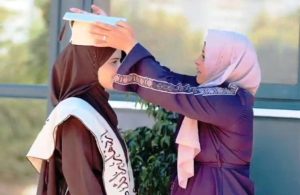
The most common gesture of blessing is to lay one’s hands on the shoulders or head of the person to be blessed. The hand represents the heart, the seat of good intentions, while the head represents the personality and the shoulders represent the person’s physical and spiritual strength. The importance of good intentions is clear here. Even being well disposed towards a person is a blessing in itself.
Recalling the divine nature, and therefore the spiritual power of the human person in African thought, helps us to understand how a good wish or intention can be beneficial. It can increase another person’s vital force and seal the unity of the elements that comprise them. If the person doing so is part of the circle of life, this sealing is seen as taking place from within.
Since intending good for someone requires drawing close to them spiritually, this process itself increases the vital energy of the person doing the intending. The gesture or ritual of blessing is believed to achieve what it signifies.
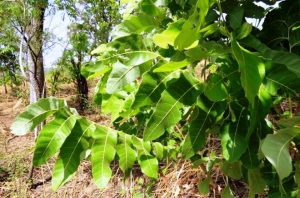
The person who blesses becomes a conduit for all the things a human being could desire: a long and healthy life, fertility, luck, prosperity, fulfilment, success, and so on. In short, blessing strengthens a person’s vital force. Almost every African culture uses plants for blessing. Examples include Olwedo for the Acholi, Iweza in Buganda and Busoga, and Akambula (the Undresser), which the Bagwere use to cleanse themselves of all evil.
These plants are used for blessings; people put their leaves in a basin of water and bathe to receive blessings, ward off curses, or counteract the effects of breaking a taboo. The verb kweza, cognate with Iweza, means ‘to have something in abundance’.
In Acholi, ‘lwero‘ may be cognate with ‘olwedo‘. It denotes the act of ‘pruning’, which is cutting away parts of a plant to help it flourish. If this assumption is true, then the olwedo plant would remove everything preventing a person from flourishing and achieving self-realisation. Here, nature becomes an ally in the fight against death.
It is believed that these plants have a vital force that humans can use to strengthen or increase their own. Some pastoral tribes in Uganda, Rwanda and Burundi do not eat mutton, yet they keep sheep alongside their cows. It is believed that the presence of sheep blesses the herd and that thunder does not strike where there are sheep. Some domestic animals are considered to be a source of blessings. Sheep, in particular, are used in reconciliation rituals and to protect against epidemics.
Some geographical locations are believed to be rich in blessings.
Apart from gigantic trees, tall stones, water sources and mountains, which are considered to be sanctuaries, crossroads are seen as places where one can bathe at night and emerge feeling cleansed. Crossroads evoke the idea of winds from the four corners of the earth. They are therefore concentrations of the earth’s vital force, acting as an axis that links heaven and earth – the ideal place for strengthening one’s vital force. Human beings are creatures of desire. We long to be better than we are and to have more than we already have. Blessings are the answer to this quest. (Edward Kanyike)