In Kisangani, the Comboni Missionaries Sisters are welcoming boys and girls who were living on the streets and are now finding a home at the Saint Laurent Centre, where they are given shelter and also hope and opportunities for the future.
Boys and girls run along the ever-crowded streets. A constant zigzagging between bicycles, cars, and wooden carts. Apprehensive faces, constantly looking around, full of fear. If the police catch them, they beat them; people avoid them. They have burned up their tender years all too quickly.
This is Kisangani, the largest city in the tropical forests of the Congo Basin and one of the country’s most important commercial centres, with an estimated metropolitan area population of approximately 1,547,000. It is a distribution and trade centre, with industries such as furniture, clothing, and agricultural production (coffee, cocoa, rubber, and rice).
Due to years of armed conflict, extreme poverty, and the collapse of family structures, many children live on the streets. They are known locally as “shégués,” a term derived from the Lingala language and meaning “street children.” It’s unknown how many there are, but estimates suggest there are thousands of children living on the streets.
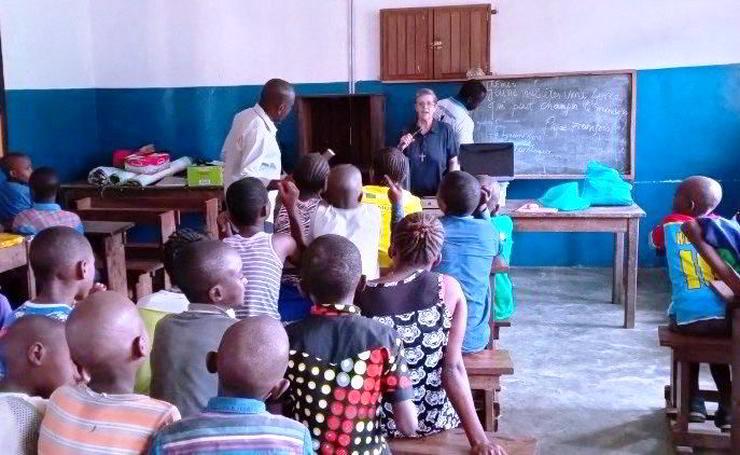
These children face precarious living conditions, poverty, social exclusion, and abandonment. They need affection, closeness, and someone to care for them. This is the goal of the Saint Laurent Center in Kisangani: to welcome and accompany children living on the streets on a journey that helps them feel good about themselves and others.
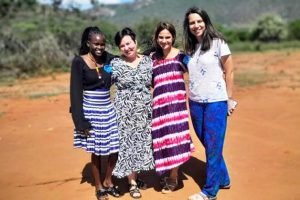
Sister Francisca Sánchez, a Spaniard, and Sister Nicole Mboma Enzenze, a Congolese, work at the centre and accompany the children in various activities.
The Saint Laurent Centre was founded on August 10, 1999, by Dehonian Father Giovanni Pross, in response to the consequences of the war that severely affected Kisangani in 1996 and 1997. The Comboni Missionary Sisters have collaborated with the centre since its inception.
The centre is organized into sectors: school, education, hygiene and health, cooking, and assistance and care. The children are divided into three facilities based on age: one for boys called Saint Laurance, another for girls called Saint Bakhita, and a third called Saint Vincent for the youngest children, which sometimes houses infants who have no family or have been abandoned. Each group has an adult who takes responsibility for them and is present day and night.
The work is not easy, and the initial approach requires patience and a great deal of sensitivity to meet the needs of children who have suffered profound trauma, especially related to abandonment. At the same time, firmness is needed to ensure that the lack of clear reference points does not render the educational process ineffective. “Initially, many minors are violent and have difficulty following the rules, so we need to be firm, but at the same time, act with tenderness,” explains Sister Nicole, who has been working at the centre since early 2024.
Sister Francisca has been working at the centre since 2021 and is responsible for the children’s human and intellectual development. “When they draw, I ask them the reason for their drawings, and the answers are very interesting. It is a very effective therapy. In this conversation, they tell me what they are experiencing and feeling, because most of them don’t have a family, or, if they do, they are not interested in them. I feel they place a lot of trust in me, and I’m grateful to God for that with all my heart. They share with me their experiences, their wounds, their fears, and their desires, which gives me great joy. I can say they’ve stolen my heart,” she adds.
Sister Francisca also oversees liturgical and musical activities, having formed a choir, an initiative that has proven to be an effective method for healing trauma. She recalls the case of Paulina: after being left mute due to a severe trauma, thanks to choral singing, she began to regain her speech and can now spell her name.
Many of the children she welcomed have stories that have left a profound impression on them. Like that of four-year-old Louis, found in the forest with severe relational and communication difficulties. Thanks to the constant and loving presence of the nuns and educators, Louis gradually began to trust others and, little by little, to speak.
Sister Francisca recalls a seven-year-old girl who suffered from a deformed foot and was taken to the city of Goma for surgery that restored her health. When she returned to Kisangani and was welcomed into a foster home, she visited the nuns and asked if she could use the manual skills she had learned at the centre to help her adoptive mother pay her school fees. The girl’s ingenuity deeply impressed the nuns and became a concrete example of how growth is possible when one feels welcomed, listened to, and valued.