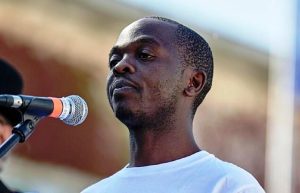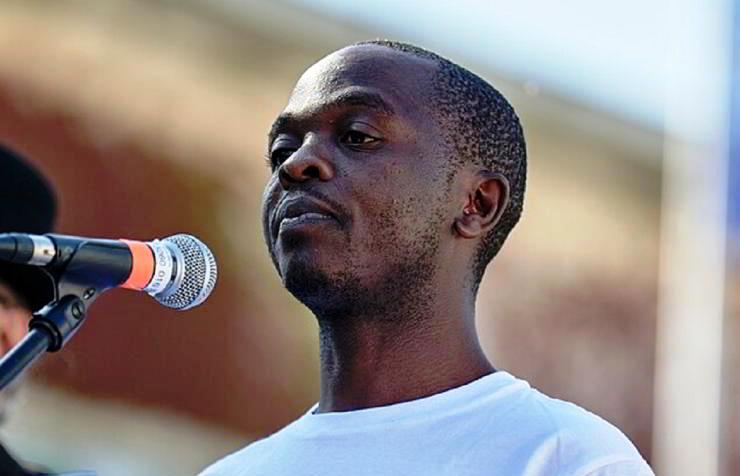
He speaks about his region, North Kivu, and notes that it has been a land in conflict for over 30 years. He highlights his campaigns: “Debt for Climate” and “Adopt a Tree, Not a Weapon.”
My activism was born out of indignation. It stems from the anger and frustration I felt regarding everything I witnessed and experienced: war, looting, villages set ablaze, the exploitation of our resources, forced child labour in mines, the recruitment of child soldiers, as well as the lack of jobs and the Congolese government’s indifference.
I told myself I had to contribute to building civic empowerment – to create an alternative rooted in the collective good and an awareness of the dangers of the conflict, while encouraging people to take non-violent action.
One of my battles is to protect Virunga National Park. It is one of Africa’s oldest parks, dating back to 1925. Its integrity is threatened by oil companies seeking to exploit its crude oil reserves. Our goal is to secure the withdrawal or cancellation of the permits and licenses already granted. We aim to achieve this through non-violent methods and citizen mobilisation, though it is by no means easy. All the campaigns we have conducted so far – such as “Fossil Free Virunga” – have taken place in an extremely difficult environment, primarily due to the presence of armed groups that engage in deforestation to produce charcoal and carry out poaching. Since we began speaking out against them, we have become their sworn enemies.
The Congolese government claims that oil extraction will boost the economy and create jobs for locals, allowing them to benefit from the resulting dividends. But this is false: experience shows that crude oil is not the solution to eradicating poverty in the DRC.
On the contrary, extraction would lead to the destruction of vast areas of the park, increase water and soil pollution, and harm the local communities living around the park who rely primarily on agriculture. Thus, the challenges we face come not only from those illegally occupying the park but also from those who govern us, given that our peaceful protests are constantly suppressed.
I would like to highlight the “Debt for Climate” campaign, which concerns more than just African nations. Indeed, the campaign calls for the cancellation of illegitimate and illegal debts owed by countries in the Global South. It is a fact that, following independence, many nations were left with debts incurred by their colonisers. The Democratic Republic of the Congo, for instance, inherited a debt of over 40 billion Belgian francs for infrastructure that was never built – no roads, markets, schools, or hospitals.
The campaign’s goal is to cancel these debts and redirect the funds toward climate action. This would enable the most disadvantaged communities – such as Indigenous peoples and other vulnerable groups – to tackle the impacts of global warming. Furthermore, the campaign aims to hold accountable the international institutions involved in this “mafia-like” system that continues to exploit and colonise the Global South.
We believe that climate justice and economic decolonisation are two sides of the same coin. In a context marked by conflict and widespread crises, climate education is the first step toward ensuring just societies. This connection manifests in concrete actions, such as our “Adopt a Tree, Not a Weapon” campaign, which aims to replace weapons with plants.
I am convinced that there can be no peace in a degraded environment, nor where resources are exploited at the expense of the local ecosystem. We will achieve prosperity for ourselves and the environment only when we cancel opaque contracts with foreign companies and recognise that certain bilateral investment agreements are, in reality, policies of exploitation.
Today, climate impacts are exacerbating an already fragile situation—one made worse by those who govern us. That is why I have taken up the challenge of linking climate action, peace, and active nonviolence.
As Patrice Lumumba said, the struggle continues. Although we gained independence, it has remained merely theoretical; politically and economically, we are not yet free from the colonial yoke. We must strive for total liberation in every sphere – not only the economic but also the social. There is still much work to be done before we can truly feel independent. (Sara Milanese) – (Photo: Wikimedia Commons)