It is a significant medicinal plant in African traditional healthcare systems due to its wide range of therapeutic properties.
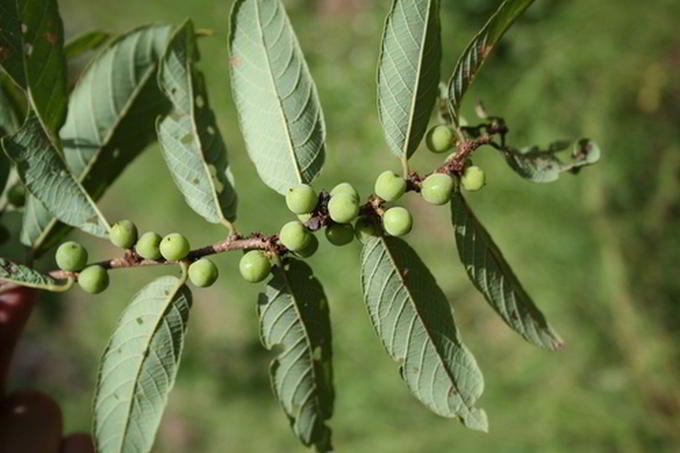
Bridelia scleroneura (family: Euphorbiaceae) is a medium-sized, deciduous tree that grows to a height of around 12 metres. Its bark is corky and turns black with age, revealing a distinctive red streak when cut. Initially sparsely hairy, the branchlets become glabrous as they mature.
The leaves are oblong or oblong-lanceolate in shape with a slightly rounded base and a tapering, subacute tip. The plant produces both male and female flowers. The bottle-shaped floral disk completely envelops the ovary, is glabrous externally and has a slightly lobed apex.
Bridelia scleroneura is a significant medicinal plant in traditional African healthcare systems due to its wide range of therapeutic properties. Its stem, bark, roots, twigs, leaves, sap and fruit are used to treat various ailments in different regions across the continent. Traditionally, the bark of Bridelia scleroneura is pounded and the extract is consumed to treat excessive bleeding following abortion or miscarriage.
Furthermore, the stem bark is administered to relieve abdominal pain, muscular contortions, arthritis, and inflammation. The bark, along with other parts, is used as a purgative, diuretic, and aphrodisiac.
It is also applied in the treatment of urethral discharges, fevers, oedemas, and rheumatic pains. These treatments may be delivered orally, through bathing, or via topical application. The bark is boiled for its medicinal value in treating dysentery and skin sores; it is also utilized as a natural dye.
The roots are widely used to ease abdominal discomfort and improve digestion. The sap obtained from the roots is applied to the gums to relieve dental pain and directly rubbed on dislocated joints to relieve pain and inflammation.
Twigs from the plant are commonly used as natural toothbrushes and are effective in maintaining oral hygiene due to their antibacterial properties. The leaves of the plant are crushed and applied as poultices to alleviate headaches and treat muscle injuries. The sap, often extracted from the wood or roots, is applied directly to painful areas such as the gums or joints. It is particularly noted for its use in relieving dental pain and treating dislocated joints through topical application.
The fruit of Bridelia scleroneura, which has a thin but succulent pulp, is consumed as food and medicine and is believed to help improve eyesight. Its palatability and nutritional value make it an important dietary supplement in addition to its medicinal role. (Richard Komakech) – (CC BY-NC-SA 4.0/Marco Schmidt