His vision as a doctor serving the poor is encouraging many young people to pursue a career in medicine. “Being a doctor also helps change society.”
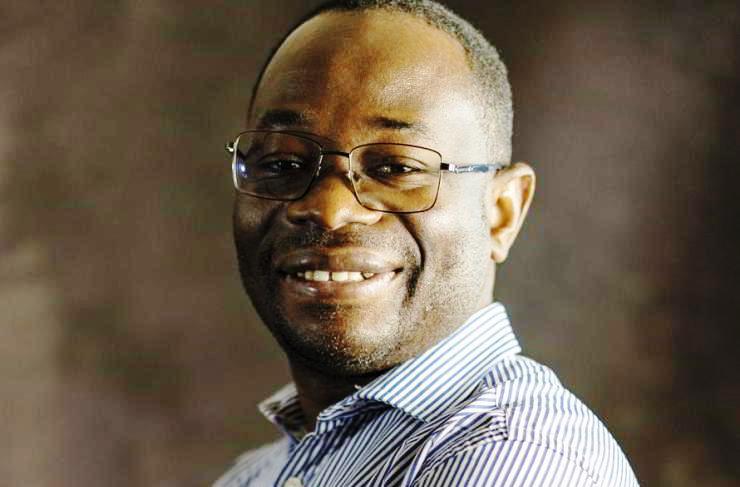
After completing his medical residency in Strasbourg, France, Cédric Patrick Le Grand Ouanekpone was ready to return to his home country, the Central African Republic (CAR). He turned down an attractive contract he was offered, and attempts to renegotiate his salary were unsuccessful.
“Being a doctor also helps change society,” says Ouanekpone, adding that “I couldn’t afford the selfishness of staying in France. I knew there were no nephrologists in my country, and I decided to return.” Furthermore, “young people need a point of reference, a role model, and we try to embody for them the figure of a doctor with a humanistic profile who isn’t just looking for money.”
The National Hemodialysis Centre in Bangui, built in 2020 by the African Development Bank and entrusted to the government for management, had been inactive for two years due to a lack of a specialist. Ouanekpone took over the centre’s medical direction, and from that moment on, lives began to be saved.
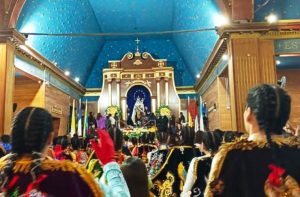
Born in Bangui on March 8, 1986, Cédric was baptised at the age of two in the parish of Our Lady of Fatima, run by the Comboni Missionaries, which plays an important role in his life. The first riots that shook the country in 1996 forced the closure of schools, and Cédric, along with other boys and girls, benefited from an educational support programme organised by the parish. On the parish priest’s recommendation, he entered the Carmelite minor seminary in 2000. He wanted to become a monk, but three years later, he changed his mind, drawn to scientific research.
When the Seleka rebellion broke out in 2012, the young man had completed his medical studies at the Faculty of Health Sciences in Bangui, but due to the war he had to wait to graduate. The cycle of violence continued for several years, transforming the parish of Fatima into a vast refugee camp, home to over 5,000 people.
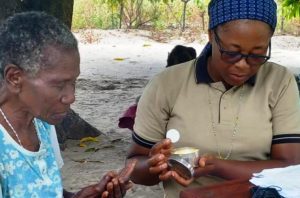
The parish leader, Ugandan Father Moses Otii, relied on Cédric and other young health workers to address the health emergency until the NGOs arrived. Cédric cared for the elderly and children with almost no resources and helped deliver dozens of babies.
In 2014, at the height of the crisis, the French NGO Cercle de Haute Réflexion sur la Jeunesse arrived in the country with a shipment of medicines, and Cédric visited and treated countless people. When the NGO wanted to pay him according to European standards, Dr Ouanekpone refused, claiming it was his modest contribution to his brothers and sisters.
In 2019, the French NGO nominated the young doctor for the World Prize for Humanism. He received this award in the Macedonian city of Ohrid.
He currently works at the National Hemodialysis Centre in Bangui. But guided by his Christian faith, Cédric has never stopped working for the community. The lack of quality healthcare services led him to promote the Mama Ti Fatima medical complex project, supported by the Association of Our Lady of Fatima for Development (ANDFD, French acronym), founded on July 11, 2020.
The doctor’s affable and communicative nature, but above all his great leadership and teamwork skills, have inspired other young doctors and healthcare professionals who share his vision, allowing the medical complex to expand across the parish. The pharmacy was inaugurated in 2020, and the medical analysis centre in 2023. In December, support from the Austrian organisation Missio-Vienna enabled completion of the emergency room building, and work on the maternity ward will soon begin, funded by the American organisation The Papal Foundation.
Furthermore, the Central African doctor balances his many activities with teaching at the Faculty of Health Sciences in Bangui, the only university medical centre in the country. He also supervises the doctoral theses of young doctors, convinced of the fundamental role of training.
“The more healthcare professionals we have, the better our future will be, because the situation in the Central African Republic is terrible. We have one of the lowest doctor-per-capita rates in the world (0.21 per 10,000 inhabitants) and no specialist doctors in the interior of the country. We are few in Bangui,” he observes sadly, but without a paralysing pessimism.
To doctors who “freely choose” to work outside the Central African Republic, he sends a message: “It’s never too late to return, because your presence here is indispensable and you can help many more people than you could by staying outside.”
Last February, he received the Mundo Negro Fraternity Award in Madrid for his commitment to improving access to proper healthcare in the Central African Republic. (MN)