“Even if we think we’re coming here to bring the Gospel, the reality is that it is already here, as many of the people we meet, whose hearts are immensely deep, teach us.” Father Placide Petit Majambo Lutumba, a Comboni missionary of Congolese origin, talks to us about his missionary experience.
As a young theology student, I was sent to South Sudan for a missionary experience lasting several months. I had the grace to be present at the proclamation of independence on July 9, 2011, and I deeply cherished the joy of a people who had suffered so much and who felt they had achieved total liberation that day. Unfortunately, things did not go so well afterwards.
South Sudan was also my missionary destination after completing my studies. I stayed in Yirol and then in Mapuordit until 2021, when I was sent to Rome for a specialisation in Pastoral Theology. I returned in January 2025, this time to Awul, in the diocese of Rumbek, where we Comboni Missionaries planned to open a new mission. I arrived with a companion who shortly thereafter asked the provincial superior to be transferred elsewhere because he couldn’t adapt to this difficult place, an area weakened by violence, where cattle theft and intercommunal conflicts are the order of the day.
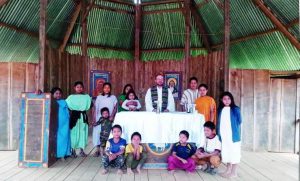
I am Congolese and I live in community with three missionaries from the Congregation of the Apostles of Jesus, a South Sudanese, and two Ugandans. Together, we try to walk with these people, giving of our best in training catechists, visiting Christian communities, and trying to revitalize new ones. Awul was evangelized by the Comboni Missionaries, who succeeded in establishing many Christian communities, but the standard of spiritual life declined with the massive expulsion of missionaries in 1964.
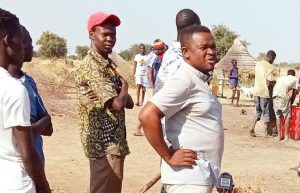
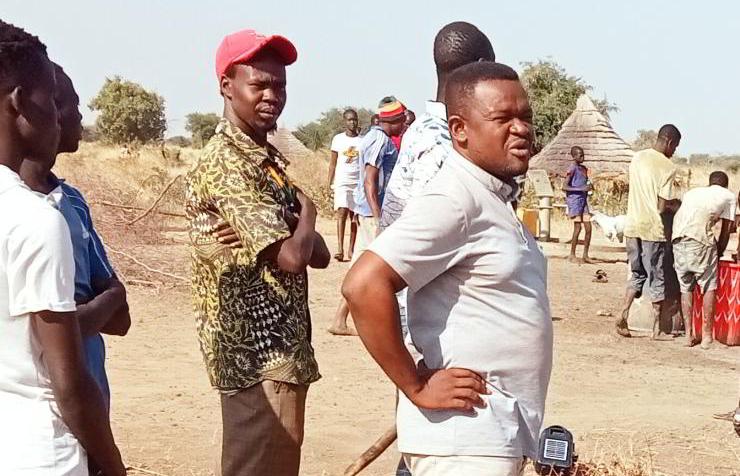
In recent months, I have lived between admiration and concern. I have found a population thirsty for the Gospel, for peace, and for education, with families longing for a better future, despite insecurity and extreme poverty. At the same time, there is a severe lack of infrastructure: there is no drinking water, and people must collect rainwater that stagnates in the ruts on the roads; there are no schools; the roads are impassable during the rainy season, and the few existing health centres are poorly equipped.
Even though we think we’re coming here to bring the Gospel, the reality is that it is already present, as many of the people we meet, whose hearts are immensely deep, teach us. I’ve begun to notice some changes, such as that young man who abandoned his weapons to devote himself to his studies, or the 17-year-old girl, Mary, who refused an imposed marriage. These are testimonies that fill me with joy.