A record-breaking number of teams will participate in the World Cup. But beyond the numbers, there’s also quality. Morocco seems the team to beat, but watch out for Senegal, eager for revenge, and the Ivory Coast. And then there’s Cinderella Cape Verde and the hopeful Congolese.
After Morocco’s historic semifinal appearance four years ago, it won’t be easy to raise the bar further, but in the first-ever XXL World Cup featuring 42 teams, the ten African teams will travel to North America not as walk-ons, but with the stated goal of making inroads in the tournament, scheduled for June 11 to July 19 in the United States, Mexico, and Canada.
Morocco still leads the way. The Atlas Lions, semi-finalists in Qatar in 2022, will sit at the World Cup table with their chests out, fresh from a continental title, albeit one won against Senegal in one of football’s most controversial ways. The controversy over the awarding of the 2025 Africa Cup of Nations has indeed left a deep mark.
Under the guidance of Walid Regragui, who later resigned and was replaced by Mohamed Ouahbi, the Moroccan national team has become a near-perfect machine, integrating the creativity of Brahim Díaz into an already well-oiled defensive framework, where Achraf Hakimi now acts as an additional attacking midfielder.
Senegal, however, arrives in America with a grudge and the anger of those who feel deprived of a throne they earned through hard work, even though the Lions of Teranga have no intention of returning the trophy they won in the match. That abandonment of the field in Rabat has become the symbol of a rebellion against a system perceived as unbalanced, but on the pitch, the Lions of Teranga continue to flex their muscles.
Although Sadio Mané remains the charismatic leader, as well as coach, new life flows through the feet of Nicolas Jackson, Bayern Munich centre forward, on loan from Chelsea, and a symbol of an inevitable generational change.
Rounding out the top contenders is Ivory Coast. After the absurd, almost cinematic epilogue of the previous continental home tournament in 2024—where they rose from the ashes of a mid-tournament dismissal to lift the trophy—the Elephants have rediscovered the competitive ferocity that seemed lost, thanks to a muscular midfield led by Franck Kessié, the unpredictability of Simon Adingra, and the electricity of Amad Diallo. The Ivorians arrive at the World Cup as the most indecipherable, and therefore dangerous, team in the pack, capable of thriving in the chaos of one-off matches.
Egypt and Ghana, meanwhile, are seeking redemption. The Pharaohs are back in the thick of the action, driven by Mohamed Salah, who is waiting for the final dance to conquer eternity. Their qualification campaign was a commanding monologue, grounded on rock-solid foundations: “Experience has taught us that talent without organisation is not enough,” commented the Liverpool star, fresh from a troubled year with the Reds.
Ghana, on the other hand, has returned to prominence but has been shaken by the coaching shakeup that has handed over the reins to Carlos Queiroz, who arrived to replace Otto Addo, who was dismissed 72 days before kick-off following a series of disappointing results. The “globetrotter” of impossible missions, who will be competing in his fifth World Cup in North America, has one priority: to bring order and hierarchy to a top-tier offensive arsenal. With the speed of Abdul Fatawu, the explosiveness of Antoine Semenyo—fresh from a record-breaking transfer to Manchester City—and the experience of Jordan Ayew, the Black Stars present themselves as a compact and organised team, ready to make their mark and play a leading role in America.
Alongside them, slightly further back on the starting grid, are Algeria and Tunisia. The new Algeria, led by Vlado Petkovic, no longer depends solely on the genius of Riyad Mahrez, but has found in Amine Gouiri and Rayan Aït-Nouri the pillars of a fluid modernity. The Fennecs now play a hypnotic possession-based style of football, aimed at controlling the pace of the match, and appear ready to redeem the disappointments of past seasons.
Also on the North African front is Tunisia. They have often been accused of playing a football that is too defeatist, excessively pragmatic and hostage to exaggerated tactical thinking. Still, in reality, the Carthage Eagles have been able to evolve, becoming a team capable of breaking through in rapid transitions.
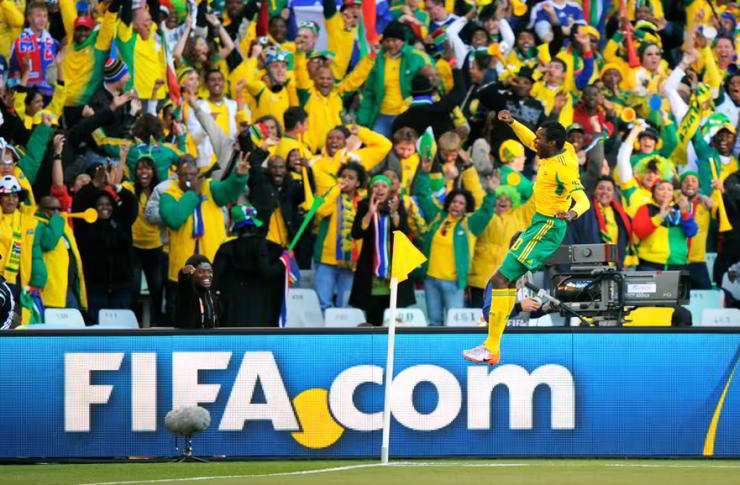
And then there are the outsiders. The return of South Africa, built almost entirely from local clubs (80% of Bafana Bafana’s roster carries the Mamelodi Sundowns label), demonstrates that the domestic championship can be a reservoir of excellence and foster a potentially decisive team spirit in short competitions. Finally, closing the circle are the exploits of the Democratic Republic of Congo and Cape Verde.
The Congolese, who had only participated in the World Cup in 1974 under the old name of Zaire, were the last to qualify, beating Jamaica in the intercontinental play-off thanks to a goal from Axel Tuanzebe. And finally, Cape Verde represents this edition’s African fairytale: a tiny, insular nation that has managed to attract the children of the diaspora, scattered across Europe, by defeating giants like Cameroon in qualifying. And who knows, perhaps they’ll manage to play the role of the formidable newcomer in North America too. (Vincenzo Lacerenza) – (Photo Courtesy of FIFA)