The Christian hospital in Karak, through dialogue, service, and remembrance, is a daily testimony of interreligious dialogue and solidarity with those who suffer.
In the heart of southern Jordan, in the town of Karak, stands a small hospital that, for over 80 years, has represented much more than a simple healthcare facility: it is a charitable institution, a laboratory for interreligious dialogue, and a living testament to how solidarity can unite different peoples and cultures. Here, care for the body intertwines daily with care for the soul and human relationships, transforming every healthcare gesture into an act of fraternity.
The hospital was founded in 1935, within a complex historical context in which Christian communities in the Middle East often lived on the margins, invisible and lacking the tangible structures that could sustain their presence. It was a prophetic choice, which not only offered an indispensable service to the population but also created a space for encounter between different faiths and cultures, leaving a profound mark destined to last for decades.
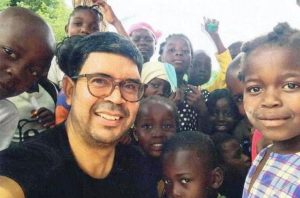
Karak, a historic city steeped in biblical tradition, is home to the Valley of Moab, the land of Ruth and Naomi. Today, it hosts a healthcare facility that primarily serves Bedouin, Gorani (descendants of ancient African communities), Palestinian, Iraqi, Lebanese, and Syrian refugees.
In this mosaic of ethnicities, languages, and religions, the hospital has become a haven, a home for the homeless, a place where no one is rejected. Jordan’s economic difficulties, exacerbated in recent years by tensions in Palestine and the tourism crisis, have severely challenged the survival of many social institutions.
Yet, the Karak hospital continues to operate thanks to private donations, international funding, and independent management, all based on great sacrifice and generosity. “We are a non-profit organisation, registered as a charitable organisation,” explains Sister Adele Brambilla, a Comboni missionary, “and we try to cover costs through local insurance and support from European organisations. Every day is a challenge, but it’s a challenge worth taking on, because here we see lives saved and hopes rekindled every day.”
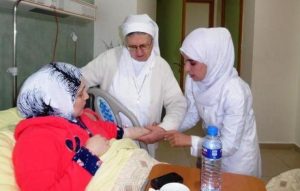
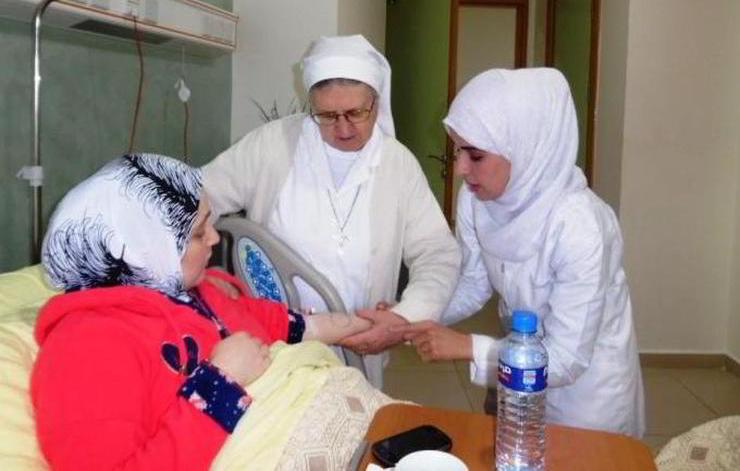
A striking element is the climate of daily collaboration: predominantly Muslim staff work side by side with Christian nuns, in a mutual respect that transcends religious affiliation. “There’s a shared humanity that breaks down all barriers,” explains Sister Adele. “Last Christmas, for example, young local Muslims spontaneously prepared a sign outside the hospital that read: ‘Your Muslim brothers wish our Christian sisters a Merry Christmas.’ Simple gestures, yet charged with meaning, that speak louder than a thousand conferences on interreligious dialogue.”
The Christian presence in southern Jordan is currently minimal: just 300 families, including Karak, Ader, and Ismakie. In this context, the hospital, with its 50 beds and essential first aid services, is more than just a healthcare centre: it is a symbol of identity and historical memory, a place where a tradition of peaceful coexistence, which has endured over time and in times of hardship, is preserved.
Despite limited resources and the decline in international aid, the mission continues thanks to the faith and commitment of those like Sister Adele and Sister Alessandra Fumagalli – recently awarded a medal of honour by King Abdullah II – who dedicate their lives to serving others. “Here,” Sister Adele recalls, “charity is done without regard to the passport or religion of those who enter. This hospital is a work of love, respect, and service to the population. It is a beacon that continues to shine even when everything seems dark.”
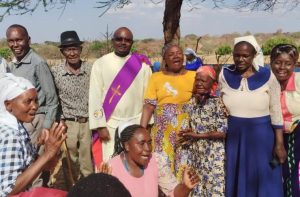
In addition to hospital services, the staff organises prevention courses, training sessions, and village visits to spread a culture of mutual respect and health. This work is quiet, away from the spotlight, yet it builds peace, day after day, starting with small, everyday gestures: a handshake, a smile, a careful listening ear. Thus, in Karak, a small hospital becomes a symbol of a possible world, where diversity does not divide, but becomes an opportunity for encounter, where care is not just a medical procedure, but a seed of peace and hope. (Ferruccio Ferrante)